
September 17, 2026
Two Waxhaw listings this year make the same point better than any spreadsheet. One is a lot inside Stevens Country Estates, a planned enclave of just six custom-built home sites, priced at $1,960,000. The other is a resale a few miles away in one of Waxhaw's established subdivisions, the kind of home that would have drawn a bidding war two years ago and now sits on the market long enough for a buyer to actually think it over. Both carry the word Waxhaw on the listing sheet. Neither tells you much about the other.
That gap is the story. Anyone comparing Waxhaw to Weddington or Marvin off a single median number is comparing a statistic that was never built to describe both of these homes at once.
As of August 2026, the median list price across Waxhaw sat near $690,000, down 4 percent from the month before and 3 percent from a year earlier, with price per square foot at $234, also down 3 percent year over year, and homes taking a median 86 days to go under contract. Pull the boundary tighter to the incorporated town limits and the picture looks different again. In March 2026, that narrower slice showed a median sale price of $519,000, down more than 14 percent from a year earlier, at $207 per square foot, with days on market stretching to 62 from 42 the year before.
Different boundaries produce different numbers. That much is expected in a town where several data providers draw the line in different places. But the boundary problem is the smaller issue here. The real split isn't geographic. It's what kind of home is actually selling.
A broker analysis covering the broader Waxhaw, Weddington, and Marvin corridor, zip code 28173, found price per square foot down 7.6 percent in the first quarter of 2026, from $263 to $243 a year earlier. That decline wasn't homes losing value one for one. It reflected a shift in which homes sold that quarter, with a heavier mix of larger and higher-priced properties moving through, alongside a genuine softening in buyer urgency. New listings rose nearly 14 percent. Active inventory climbed almost 22 percent to 1,448 homes. Months of supply jumped close to 48 percent, from 6.47 to 9.55. Homes sold actually fell 7.5 percent.
Read together, that's a production-housing market cooling in an orderly way. More choices, longer decisions, sellers no longer able to assume a multiple-offer outcome. If your search is a resale in an established subdivision, this is useful information. It tells you that time is now on your side in a way it wasn't eighteen months ago.
It tells you almost nothing about the other Waxhaw.
While the broad averages were softening, two new gated communities inside Waxhaw kept opening at premium prices, unmoved by the numbers above them.
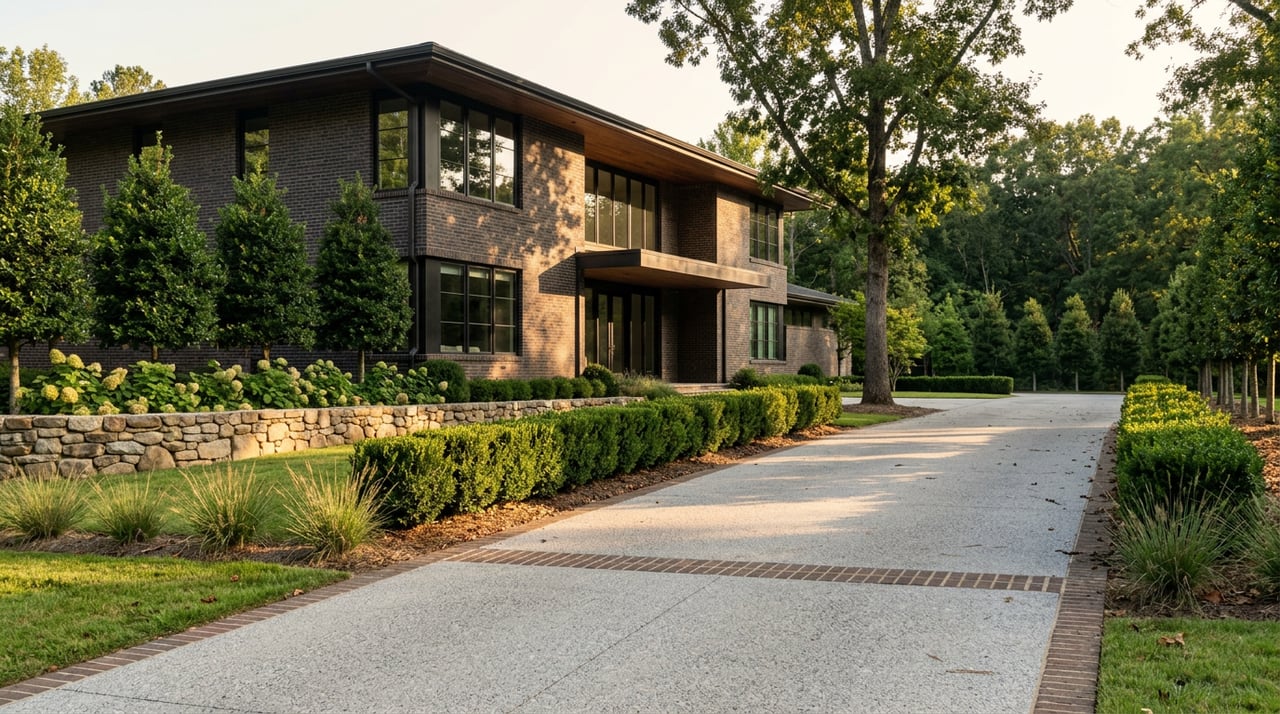
Cane Manor, described in current listings as Waxhaw's newest gated community, is building out nine estate homesites on private acreage. One lot, offering more than 5,000 square feet on 2.19 acres, was under construction and expected to finish October 1, 2026. Another, at roughly 4,000 square feet on 2.13 acres, was marketed around the kind of privacy that's become harder to find close to town. Stevens Country Estates, the six-lot enclave mentioned above, was asking just under $2 million for a single home site, before construction.
Neither community discounted to track the town-wide price-per-square-foot dip. Neither needed to. When a development has six lots, or nine, the price is set by how many buyers want one of those specific addresses, not by how many resale homes are sitting on the broader market. Scarcity here is a fixed number, not a supply curve that responds to interest rates or buyer sentiment the way production housing does.
If the split were simply new construction commanding a premium over resale, that would be a tidy rule. It isn't quite that clean. Chatelaine, a small gated enclave of custom estate homes off Twelve Mile Creek Road on the county line with Weddington, was built mostly between 2005 and 2017. It's not new. It's also not discounted. A resale in nearby Marvin Creek, a community with a Waxhaw address, listed at $1,699,000 this year. Both properties are priced closer to Cane Manor and Stevens Country Estates than to the broader resale figures pulling the town median down.
The pattern that actually holds is about land and lot count, not build date. Once a neighborhood is defined by a small number of large, private lots, whether it was built in 2008 or is finishing construction in October 2026, it prices on scarcity rather than on the same curve as production subdivisions. A local Waxhaw cost of living analysis makes a version of this same point directly: newer construction is not automatically the pricier option, and an established neighborhood can offer more square footage per dollar than the newest available floor plan, depending on where you're comparing.
For a relocating family or an executive comparing towns on a spreadsheet, the practical lesson is to stop comparing town-wide medians once your search moves above roughly $1.5 million. At that price point, you are shopping in the low-volume luxury layer that barely registers in a statistic weighted by transaction count. A town median built mostly from resale subdivisions and production-built starter homes will tell you almost nothing about how six lots at Stevens Country Estates or nine at Cane Manor are actually pricing against comparable inventory in Marvin or Weddington. The comparison that matters is lot count against lot count, acreage against acreage, and days on market within that specific tier, not the headline number that shows up first in a portal search.
For a buyer shopping resale in an established subdivision, the opposite lesson applies. The softening shown in the first quarter 2026 data, the longer days on market, the rising months of supply, is real leverage. Sellers in that segment are competing against more active listings than they were a year ago, and a buyer who understands that arithmetic is in a stronger negotiating position than the town-wide median alone would suggest.
If Waxhaw's price per square foot is falling, does that make it a buyer's market right now? In the established resale and production-built segment, the data points that way. Inventory is up, days on market are longer, and price per square foot has eased. In the small-lot gated and custom developments opening this year, none of that softening shows up. Ask which segment your search actually falls into before assuming the town-wide trend applies to your price range.
Will new construction in Waxhaw always cost more per square foot than resale? Not necessarily. The Chatelaine and Marvin Creek examples above show that an older, established property on a large private lot can command pricing closer to brand-new gated inventory than to the broader resale average. Build date matters less than lot scarcity once you're above the production-housing price band.
Waxhaw's numbers are easy to misread if you only look at the town-wide average. The full picture, especially once a search moves into the seven-figure range, takes someone who tracks which lots are left in Cane Manor, what Stevens Country Estates is asking for its remaining sites, and how that compares to what's active in Marvin and Weddington the same week. Sally Awad works this corridor daily and can walk you through what your specific budget actually buys across Waxhaw's segments. Request a Private Luxury Consultation to start with a comparison built around your search, not the town median.
Ten years into her real estate career, Sally remains just as committed to her clients as she did when she first earned her license. She thoroughly enjoys partnering with clients to realize their dream of homeownership, genuinely striving to have each and every client feel valued, heard, and understood throughout their home-buying journey.